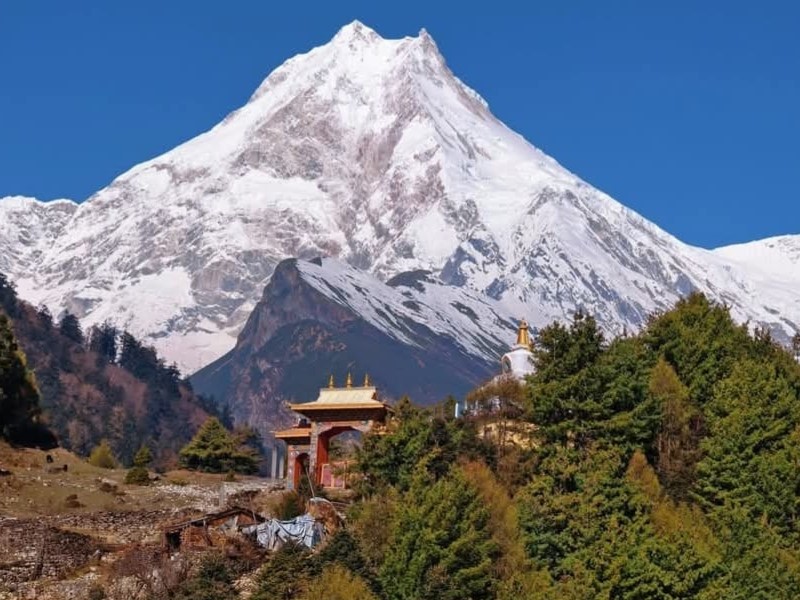
Tiji Festival in Upper Mustang
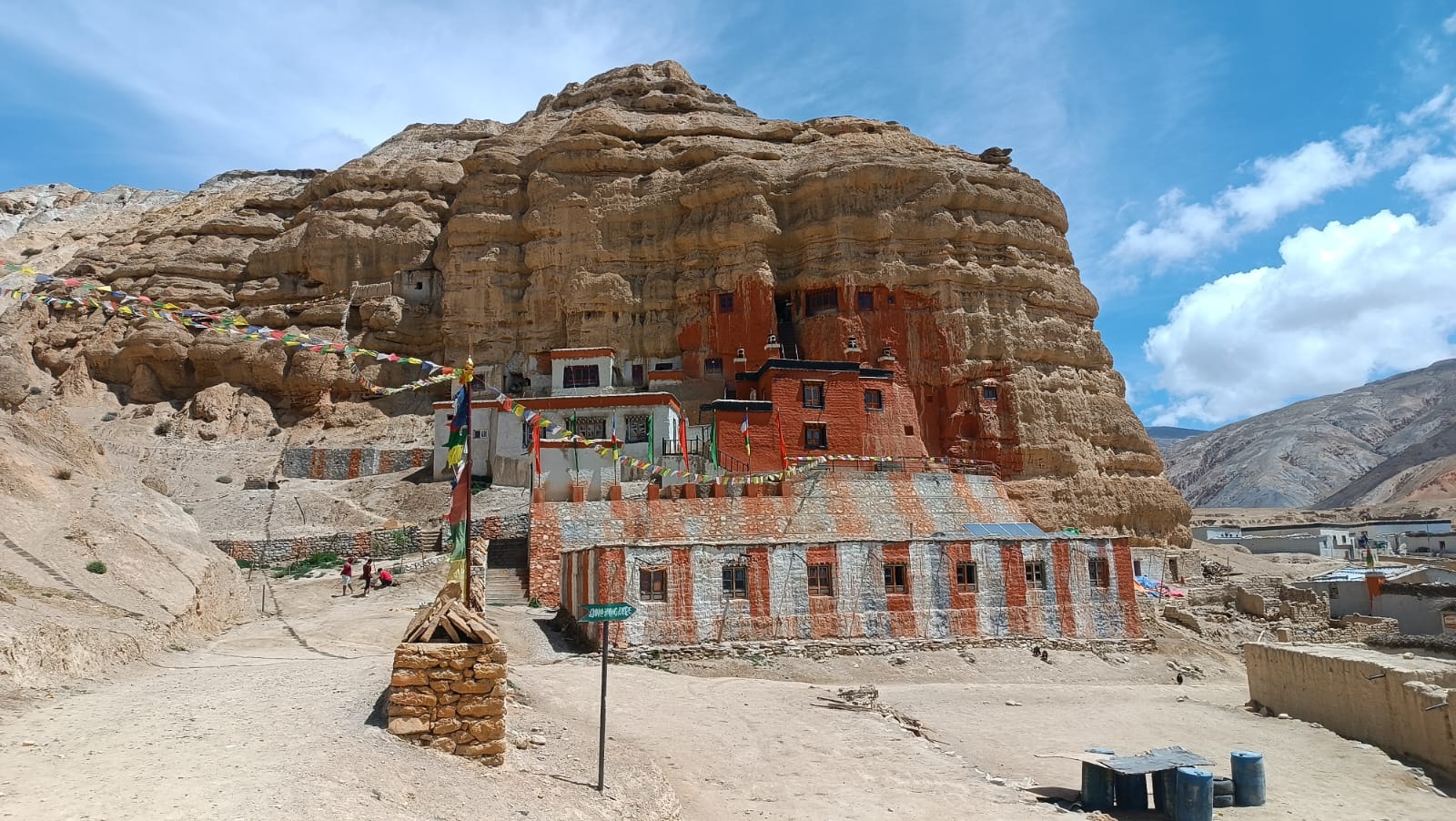
Tiji Festival in Upper Mustang
Every May, something extraordinary happens in a remote walled city high in the Himalayas and most of the world has no idea it’s happening.
Somewhere in Upper Mustang, at 3,840 meters above sea level, there is a small walled city called Lo Mustang. It looks like something out of a history book: mud-brick walls, a royal palace that has been standing since 1380, monasteries with paintings that are hundreds of years old. And every year, usually in May, this quiet city becomes the stage for one of the most extraordinary festivals in all of Asia.
It’s called the Tiji Festival. Locals call it “Tenpa Chirim,” which means “Prayer for World Peace.” For three days,over 65 monks fill the open courtyard in front of the King’s Palace and perform a sacred dance that has been performed every single year for over 400 years. They wear massive masks, carry ritual objects, beat drums, and blow long horns that echo off the canyon walls. The crowd, locals who have walked for days from their villages, and a small number of foreign visitors watch in silence and awe.
If someone asked what the single most visually stunning and culturally deep festival in Nepal is, the Tiji Festival would be a strong answer. And yet most casual travellers to Nepal have never heard of it. That’s partly because getting there is not easy, and partly because Upper Mustang was closed to the outside world for most of recent history. But for those who make the effort, it is the kind of thing that stays with people for the rest of their lives.
The Story behind the Festival
A long time ago, according to local Tibetan Buddhist belief, a powerful demon called Man Tam Ru was causing terrible suffering in the Kingdom of Mustang. He was eating people, destroying crops, and stealing the water, basically turning the land into a dry, dying place. The people had no way to stop him.
A deity called Dorje Jono decided to fight the demon and save the kingdom. The catch? The demon was his own father. Despite that, Dorje Jono fought, defeated the demon, and brought peace, rain, and life back to Mustang. The Tiji Festival reenacts this battle every year, not just as a performance, but as an active spiritual ritual. The monks aren’t acting out a story for entertainment. They believe the ritual itself protects the kingdom for another year, brings rain to the fields, and keeps bad forces away from the community.
The festival traces its formal roots to the 17th century, when the King of Mustang at the time, Samdup Rabten, invited a respected Sakya Buddhist scholar named Ngawang Kunga Sinam to Lo Manthang to purify the city after a series of natural disasters. The scholar brought a practice called Vajrakila, a tantric ritual originally introduced to the Himalayas in the 8th century by Guru Padmasambhava and taught the monks of Choedhe Monastery the sacred dances that go with it. Since then, the monks of Choedhe have performed this ritual every single year without a break. That is not a small thing. More than 400 years of continuous practice, in the same place, by monks from the same monastery, using the same dances and the same ritual objects. That kind of living tradition is extremely rare anywhere in the world.
What Actually Happens Over Three Days
The festival always takes place in the open stone courtyard in front of the Tashi Gephel Palace, right in the heart of Lo Manthang. People gather early each day. Locals take the best spots and they deserve them, because for them this is not tourism; it’s a sacred community event. Elderly residents get seats of honour. Children run around the edges. Visitors from outside are welcome but are guests at someone else’s ceremony, which is worth keeping in mind.
Day One: Calling the Gods
The first day starts at noon. The sound of long Tibetan horns called Dhungchen fills the air first, a deep, rumbling sound that seems to come from somewhere older than time. Drums and cymbals join in. Then the monks come out.
They wear elaborate masks and bright, heavy costumes that represent different gods, protectors, and spiritual forces. The lead dancer, called Tsowo, plays the role of Dorje Jono himself. This is one of the most demanding roles in Tibetan Buddhism. The Tsowo spends three months in complete isolation inside the monastery before the festival, preparing for the ritual through prayer and practice.
The first day’s dances, called “Tsa Chham,” are focused on calling the good forces and making the sacred space ready. There are 52 separate dance steps. A large, old Thangka painting, a sacred painted cloth artwork, gets hung on the southern wall of the palace. It has been hung there every year for centuries.
Day Two: The Battle
Day two is the one most visitors remember most clearly. This is the heart of the festival, and the energy in the courtyard is completely different from anything on a normal day. More monks join the dances, the steps get more complex, and the story of the battle between Dorje Jono and his demon father plays out through movement, colour, and sound.
Animal-masked figures appear as warriors in the form of sacred animals who fight alongside the hero deity. The dances go on for hours. People barely move. The atmosphere is hard to describe: it is serious and sacred and at the same time visually overwhelming in the way that only something very old and very genuine can be.
Day two is also the best day for photography, if you are respectful about it. The costumes are at their most detailed, the light in Lo Manthang in the afternoon is extraordinary, and the energy of the crowd gives the whole scene a kind of life that is difficult to capture but easy to feel.
Day Three: The Demon Falls
The final day brings everything to an end. Over the course of the morning, the monks build a small figure, an effigy of the demon. At the climax of the ceremony, Tsowo pierces it with a ritual dagger. Ancient muskets fire into the sky. The crowd shouts “Lha Gyalo!” which means “May God be victorious!” The demon is defeated. The kingdom is safe for another year. Rain and good harvests will come.
Then, in a procession that moves outside the city walls, the monks carry the defeated demon away from Lo Manthang.Upper Mustang Trekking It is a powerful ending to three days of ceremony, and for many visitors it is one of the most moving things they have ever seen.
After the main ceremony, the celebrations continue in a looser, more joyful way. People share food, visit family, and enjoy the feeling of a community that has just done something important together. For locals who walked for several days from distant villages to be here, these hours after the ceremony are just as important as the ceremony itself.
Lo Manthang: The City That Makes It All More Extraordinary
You cannot talk about the Tiji Festival without talking about where it happens, because the place is just as remarkable as the event.
Lo Manthang was founded in 1380 by a king called Ame Pal, the first ruler of the Kingdom of Lo. The walled city is roughly 300 meters by 150 meters, surrounded by mud-brick walls about 7 meters high. Inside those walls: the four-story royal palace, three important monasteries with 14th-century paintings inside, narrow winding streets, and about 1,300 people who still live their lives in much the same way their great-grandparents did.
The city sits in a dry, almost desert-like landscape. The mountains here have been carved by wind and time into deep red and orange shapes. There is almost no green. The sky is very blue and very big. It looks, honestly, more like the surface of another planet than anything in the Nepal most visitors picture when they think of Nepal.
Upper Mustang was a restricted area closed to outsiders until 1992. Before that, it had been more or less cut off from the modern world for decades. That long period of isolation is actually what preserved it: the culture, the buildings, the traditions, the way of life. As one guide put it: “It is a live museum.” That’s not an exaggeration.
Why This Festival Is Different From Everything Else
Nepal has a lot of festivals. Most of them are wonderful. But Tiji sits in a different category for a few reasons.
First, the setting. There is no festival anywhere that takes place in a location quite like the courtyard of the Tashi Gephel Palace in Lo Manthang, an ancient walled city in a high-altitude desert, surrounded by mountains, with no modern buildings in sight. The backdrop alone is enough to make everything feel extraordinary.
Second, the continuity. This is not a festival that was revived for tourism or updated for modern audiences. The monks of Choedhe Monastery have performed the same ritual, in the same place, in the same way, for over 400 years. There is something about witnessing a living tradition that is old and unbroken that is genuinely hard to put into words.
Third, the community. As one travel writer described it: even if no outside visitor ever came, the Tiji Festival would still happen. It exists because the community needs it. People walk for days from distant villages to be there. Older residents get seats of honour. Children grow up watching the same dances their grandparents watched. Visitors are welcome, but they are guests at a community celebration, not the audience for a show. That difference changes the whole feeling of being there.
And fourth, the access. Upper Mustang is still genuinely hard to get to. The permits are expensive, the roads are rough, the flights are small. Because of that, Tiji never gets overwhelmed with large tourist crowds the way some other famous festivals do. The courtyard in Lo Manthang holds maybe a few hundred people. Visitors are genuinely a small part of that number. It stays intimate.
Final Thoughts
The Tiji Festival is not the easiest thing to get to in Nepal, and it is not the cheapest. But it might be the most rewarding. Watching 65 monks perform a 400-year-old sacred dance in the courtyard of an ancient walled city, while the red desert mountains rise behind them and the sound of Tibetan horns fills the air, is one of those experiences that people describe as a turning point a moment that changes how they think about time, tradition, and what human culture is actually capable of preserving.
If the idea of it makes something in you go quiet and pay attention, that’s probably the right reaction. Start planning. Book a good agency. Build plenty of time into the trip. And when you finally stand in that courtyard in Lo Manthang and hear the first note of the Dhungchen horn, you will understand what all the fuss was about.