
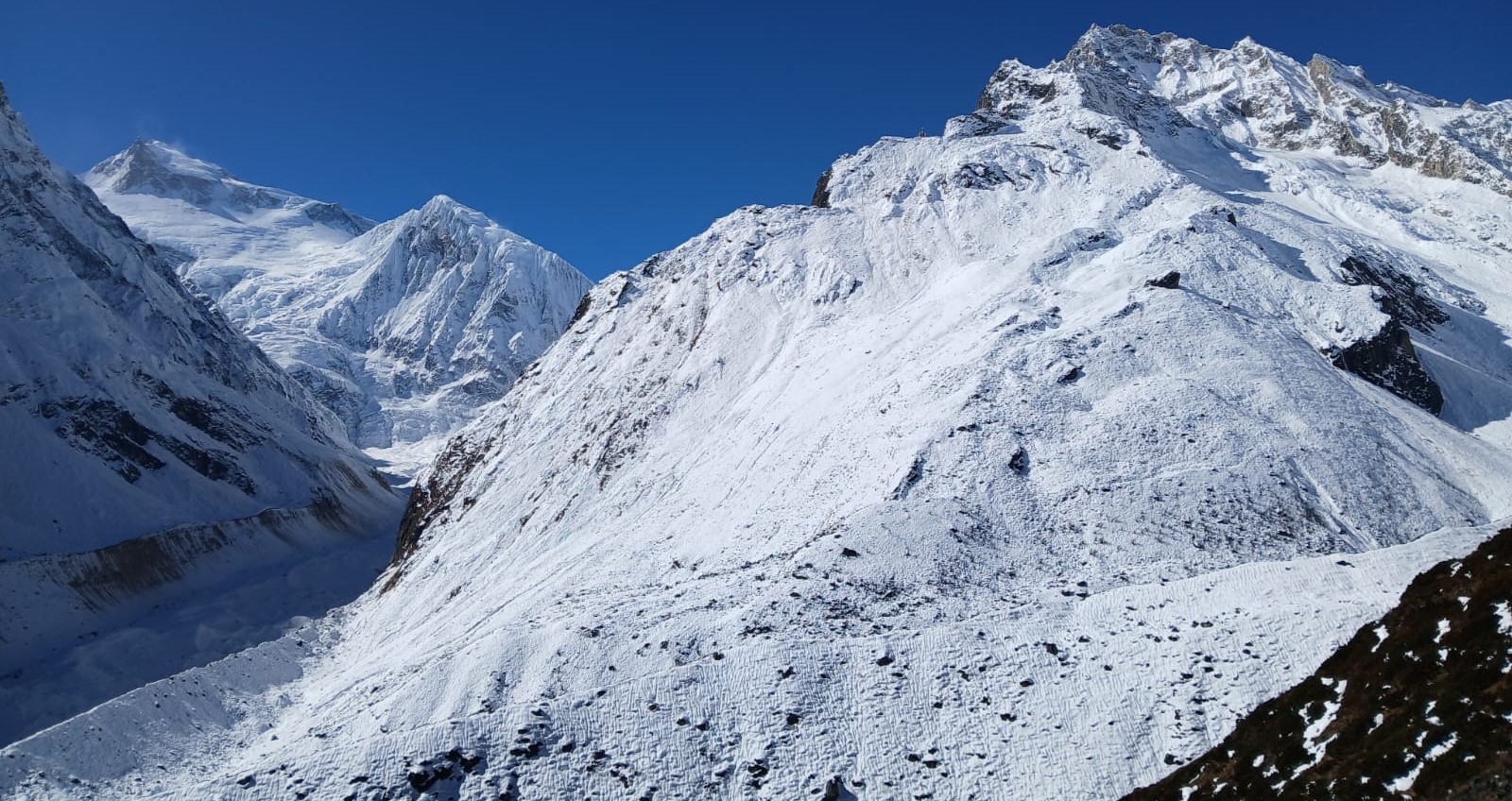
Larke Peak Climbing Overview
The Larke Peak Climbing trip is an exciting 16-day adventure that connects a beautiful trek with the challenge of climbing a high mountain. Larke Peak stands at 6,249 meters in the protected Manaslu region, making it a great choice for walkers who want to try real mountain climbing for the first time. The climb is perfect for beginners because it is not as difficult as other giant peaks, but it still gives you a real sense of achievement. From the top, you get a front-row view of massive mountains like Mount Manaslu, Ganesh Himal, and Annapurna II.
This journey starts with a scenic drive from Kathmandu to Machha Khola, where you begin walking. For the first few days, you will follow a wild river valley through deep rock canyons, thick bamboo forests, and green farms. As you climb higher, thttps://www.wellplantrekking.com/activities/short-manaslu-circuit-trekking/he trees disappear and change into gray rock and white snow. On the way, you will walk through old villages rich in Tibetan-Buddhist culture. By combining a classic trek with a peak climb, you get the perfect mix of local culture and high-mountain adventure.
Major Highlights of the Larke Peak Climbing
- Reach the snowy summit of a Larke peak at 6,249 meters.
- View giant snow-capped mountains up close, including Mount Manaslu, Himlung Himal, and Ganesh Himal.
- Discover an authentic Tibetan-Buddhist culture in the quiet, restricted Manaslu valley.
- Master basic mountain climbing skills with expert guides at the high-altitude camps.
- Experience warm hospitality and stay in traditional local teahouses along the trail.
- Pass over long suspension bridges hanging high above rushing glacier rivers.
- Catch beautiful golden sunrises over massive walls of ice and snow from high viewpoints.
- Finish your amazing journey with a relaxing walk through the beautiful green meadows of Bimthang.
Trekking Through the Hidden Manaslu Valley
Trekking through the hidden Manaslu Valley is an adventure that begins with a drive from Kathmandu to Machha Khola. The first half of this trip follows the wild Buri Gandaki River valley up into the restricted Manaslu zone. As you pass the entry checkpoints, you will notice how quiet and peaceful the paths are compared to busy tourist routes like Everest Base Camp. As you gain altitude and cross into villages like Namrung, the green forests fade away and you will see locals in traditional clothing and large prayer-carved mani walls under the backdrop of Mount Manaslu. In Samagaon, you will spend an acclimatization day resting in a cozy local lodge. Pushing higher, you will leave Samdo Village behind and climb to the high camp at Dharamsala (4,470 meters).
Climbing the Larke Peak
Climbing the Larke Peak actually begins as you turn away from the main trekking trail and head up toward Larke Base Camp. You will move up to the Summit Base Camp to prepare for the big climb. You will switch from sleeping in teahouses to staying in high-quality mountain tents. Your expert guides will use this time to teach you how to use your technical gear.
Reaching the top of Larke Peak rewards you with panoramic views of the surrounding Himalayas. After celebrating and taking photos on the summit, you will make a careful descent back. From Bimthang, you will walk down through thick pine and rhododendron forests to Dharapani before taking a drive back to Kathmandu.
| Day | Destination | Sleep altitude | Duration | Distance | Activities |
|---|---|---|---|---|---|
| 01 | Kathamndu | 1345 m | 30 min | 7 km | Arrival at the airport, private transfer to the hotel, |
| 02 | Kathmandu | 1345 m | Full Day | Full Day | Free day to rest, check gear, and prepare the official permits |
| 03 | Machha Khola | 960 m | 8-9 hrs | 170 Km | Drive from Kathmandu through countryside roads to the trail start. |
| 04 | Jagat | 1400 | 6-7 hrs | 21 Km | Trek along the rocky banks of the rushing Buri Gandaki River |
| 05 | Dyang | 1800 m | 6-7 hrs | 20 Km | Hike through narrow rock gorges and dense bamboo forests. |
| 06 | Namrung | 2660 m | 6-7 hrs | 19 km | Climb steeply through cool pine forests up to a high village. |
| 07 | Sama-Gaon | 3530 m | 6-7 hrs | 17 km | Trek into a wide valley with close-up views of Mt. Manaslu. |
| 08 | Sama - Gaon | 3530 m | Full day | Full day | Acclimatization Day. Rest or take a local excursion to viewpoints. |
| 09 | Samdo | 3860 m | 4-5 hrs | 9 km | Climb gently through high pastures where yaks graze. |
| 10 | Dharamsala | 4460 m | 4-5 hrs | 10 km | Hike a rough, rocky trail to the high camp below the pass. |
| 11 | Larke Base Camp | 5106 m | 5-6 hrs | 10 km | Trek to Larke Base Camp and set up the first tent camp. |
| 12 | Larke Base Camp | 5106 M | Ful Day | Full day | Training to climbing , check climbing gear, and rest early. |
| 13 | Larke Base camp | 5106m | Full Day | Full Day | Free extra days |
| 14 | Bhimtang | 3850 m | 8-9 hrs | 21 km | Summit Larke Peak (6,249m) and trek down to the green meadows. |
| 15 | Dharapani | 1860 m | 6-7 hrs | 24 km | Drop through pine forests and cross back down to the main trail. |
| 16 | Kathmandu | 1345 m | 8-9 hrs | 230 Km | Drive from Dharapani back to Kathmandu |
| 17 | Departure | Departure | 30 min | 7 km | Departure |
Trip Details Itinerary
Day 01: Arrival at Kathmandu Airport then Transfer to the Hotel
- Distance : 7 Km
- Duration : 30 min
- Max. Altitude :1345 m
Upon your arrival at the Kathmandu airport, you will be warmly welcomed by our company representatives and guides. A private transfer will take you straight to your hotel in the city. After checking into your room, you can relax and refresh before joining a group briefing in the hotel lobby, where your guide will share important details about your upcoming trek.
- Accommodation: 3 Star Hotel
- Meals Include:
Day 02: Free day in Kathmandu to prepare the permits
- Distance : Full day
- Duration : Full day
- Max. Altitude :1345 m
This day is set aside for our team to process your restricted area tracking permits and official peak climbing documents with the government offices. You can use this free time to explore the historic streets of Kathmandu, do some last-minute sightseeing around heritage sites, and double-check your personal mountain gear.
- Accommodation: 3 Star Hotel
- Meals Include: Breakfast
Day 03: Drive from Kathmandu to Machha Khola
- Distance : 170 Km
- Duration : 7-8 hrs
- Max. Altitude :960 M
Your journey begins with a long, scenic drive out of the Kathmandu valley. The road winds along green hills, terraced farm fields, and rushing rivers. You will pass through local highway towns and eventually drive along a rougher dirt road to reach the small village of Machha Khola, where your walking trail starts tomorrow.
- Accommodation: Tea House
- Meals Include: Breakfast , Lunch and Dinner
Day 04: Trek from Machha Khola to Jagat
- Distance : 21 Km
- Duration : 6-8 hrs
- Max. Altitude : 1400 m
Today, you lace up your boots and start your walk. The trail follows the banks of the wild Buri Gandaki River, taking you up and down rocky tracks. You will cross several long suspension bridges hanging high over the water, walk past natural hot springs, and hike through narrow valleys until you enter the clean, stone-paved village of Jagat.
- Accommodation: Tea House
- Meals Include: Breakfast , Lunch and Dinner
Day 05: Trek from Jagat to Dyang
- Distance : 20 Km
- Duration : 5-7 hrs
- Max. Altitude :1800 m
Leaving Jagat, you enter the restricted government tracking zone. The trail climbs up a rocky ridge to Salleri and then drops down to Sirdibas. You will walk through narrow rock canyons, dense bamboo forests, and small farming settlements before crossing a final suspension bridge to reach the small village of Dyang.
- Accommodation: Tea House
- Meals Include: Breakfast , Lunch and Dinner
Day 06: Trek from Dyang to Namrung
- Distance : 19 km
- Duration : 5-7 hrs
- Max. Altitude :2660 m
Today’s path involves a lot of uphill walking as you gain significant altitude. You will climb through cool, thick pine and rhododendron forests where the air begins to feel noticeably fresher. The trail passes through small cultural settlements, leading you up to the high village of Namrung, which offers your first great mountain views.
- Accommodation: Tea House
- Meals Include: Breakfast , Lunch and Dinner
Day 07: Trek from Namrung to Sama-Gaon
- Distance : 17 km
- Duration : 6-7 hrs
- Max. Altitude :3530 m
As you walk today, the heavy green forests fade away, and you enter a wide valley steeped in ancient Tibetan-Buddhist culture. You will pass large stone walls carved with prayers (mani walls) and see colourful prayer flags. The village of Sama-Gaon offers an absolutely breathtaking, close-up view of the massive peak of Mount Manaslu.
- Accommodation: Tea House
- Meals Include: Breakfast , Lunch and Dinner
Day 08: Acclimatization Day in Sama-Gaon
- Distance : Full day
- Duration : Full day
- Max. Altitude :3530 m
This is a necessary rest day to help your body adapt to the thin mountain air. You can spend the day relaxing with a hot cup of tea at your lodge and exploring the village streets. If you feel strong, you can take a scenic side hike to local viewpoints or explore the old monasteries nearby to help you adjust to the elevation.
- Accommodation: Tea House
- Meals Include: Breakfast , Lunch and Dinner
Day 09: Trek from Sama-Gaon to Samdo
- Distance : 9 km
- Duration : 4-5 hrs
- Max. Altitude :3860 m
Today, you enjoy a shorter, easy walk that follows the Buri Gandaki River as it shrinks into a small stream. The trail climbs gently through high alpine meadows where yaks graze on the grass. You will leave the last trees behind and arrive at Samdo, a remote village located very close to the border of Tibet.
- Accommodation: Tea House
- Meals Include: Breakfast , Lunch and Dinner
Day 10: Trek from Samdo to Dharamsala
- Distance : 10 km
- Duration : 5-6 hrs
- Max. Altitude :4460 m
The trail climbs steadily today into a raw, wild landscape of gray rock and white snow. Vegetation disappears completely as you make your way to the high camp at Dharamsala. The air here is very thin, so you will walk at a slow, steady pace. You will eat an early dinner and go to bed early to rest your body.
- Accommodation: Tea House
- Meals Include: Breakfast , Lunch and Dinner
Day 11: Trek to Larke Base Camp
- Distance : 10 km
- Duration : 4-5 hrs
- Max. Altitude :5106 m
Today, you leave the main tracking trail behind and head toward the wild slopes of Larke Peak. The path is rocky and challenging as you climb toward Larke Base Camp. Here, our professional crew will set up your high-quality mountain tents, and you will enjoy freshly prepared meals by our kitchen team.
- Accommodation: Tent Camping
- Meals Include: Breakfast , lunch and Dinner
Day 12: Larke Base Camp Climbing preparing
- Distance : Full day
- Duration : Full day
- Max. Altitude :5106 m
Training to climbing, check climbing gear, and rest early
- Accommodation: Tent Camping
- Meals Include: Breakfast , Lunch ad Dinner
Day 13: Larke Base Camp extra Day
- Distance : Full Day
- Duration : Full Day
- Max. Altitude :5106 m
This day is the extra, if there are weather problems, etc
- Accommodation: Tent Camping
- Meals Include: Breakfast , Lunch and Dinner
Day 14: Summit Larke Peak and Trek to Bimthang
- Distance : 17 Km
- Duration : 8-9 hrs
- Max. Altitude :6249 m
Waking up around midnight, you start climbing by headlamp light up steep snow slopes. Pushing through the cold air, you reach the incredible 6,249-meter summit of Larke Peak for panoramic mountain views. After celebrating, you drop carefully down past the Larke La trail and descend all the way to the green meadows of Bimthang.
- Accommodation: Tea House
- Meals Include: Breakfast , Lunch ad Dinner
Day 15: Trek from Bimthang to Dharapani
- Distance : 24 km
- Duration : 6-8 hrs
- Max. Altitude :1860 m
Today, you walk down through thick, fresh-smelling pine and rhododendron forests, enjoying the thicker air. You will pass through small farming settlements and follow the river trail downwards until you reach the bustling village of Dharapani, where you join the main motor road.
- Accommodation: Tea House
- Meals Include: Breakfast , Lunch and Dinner
Day 16: Drive from Dharapani back to Kathmandu
- Distance : 230 km
- Duration : 8-9 hrs
- Max. Altitude :1345 m
You will board a private vehicle for your return drive to Kathmandu. The road runs alongside green hills, rural highway towns, and rushing rivers, bringing you back to the capital city by afternoon. In the evening, you will join a special farewell dinner with your team to celebrate your successful summit.
- Accommodation: 3 Star Hotel
- Meals Include: Breakfast , Lunch and farewell Dinner
Day 17: Departure Day
- Distance : 7 km
- Duration : 30 Min
- Max. Altitude :
This is your final day in Nepal. You can spend your morning packing your bags or doing some last-minute souvenir shopping around town. Our company representative will pick you up from your hotel and provide a private transfer to the international airport for your flight back home.
- Accommodation:
- Meals Include: Breakfast
Cost Details
THE PACKAGE INCLUDES THE FOLLOWING SERVICES
- Airports pick up and drop off, upon arrival and departure in Kathmandu.
- Pre-meeting before the trek.
- 2 Night hotel accommodation in Kathmandu with breakfast (3-star hotel)
- Helpful, knowledgeable, friendly, well English-speaking trained, government license holder guide with all his salary, food, drinks, accommodations, and insurance
- Meals on full board ( Breakfast, Lunch, and Dinner ) with 3 times tea/coffee during the trek
- A strong, Helpful porter with proper equipment ( one porter for two people – the porter will carry a maximum of 25 kilos ),
- Seasonal fresh fruits are available
- Tea House + Camping combined accommodation during the trek – as per the itinerary
- Experienced trekking & climbing guide
- Necessary climbing gears
- Kitchen equipment and camping equipment during the climbing period
- 1 Well Plan Trekking T-shirt
- Kathmandu – Macha -Khola – Dharapani – Kathmandu transportation on a private vehicle
- Manaslu Special trekking permit fee.
- Climbing permit for Larkya Peak
- Manaslu Conservation Area entrance permit fee.
- Tsum Valley rural municipality entrance ticket.
- Annapurna Conservation Area entrance permit fee.
- Manaslu Trekking Map
- Duffel bag
- Well Plan Trekking down jacket and sleeping bag if required ( After trek Return )
- Worst case, help with all rescue and evacuation arrangements.
- First aid medical kit and oximeter to check pulse, heart rate, and oxygen saturation at higher altitudes.
- All applicable taxes are in accordance with government rules and regulations.
- Well plan trek achievement certificate after the successful trek
- Farewell dinner in Kathmandu at a cultural restaurant
THE PACKAGE EXCLUDES THE FOLLOWING SERVICES
- International airfare
- Nepal entry visa fee (you may easily issue the visa upon your arrival at Tribhuwan International Airport – Kathmandu).
- Travel insurance, which has to cover emergency high-altitude helicopter rescue and evacuation in addition to medical expenses (compulsory)
- Your personal expenses. (Phone call, Wifi, Laundry service, bar bills, battery recharge, a bottle of water or hot water, Mineral water, Hot shower, etc.)
- All the alcoholic drinks and bar bills.
- Extra Hotel accommodation in Kathmandu because of early arrival or late departure. early arrival from the mountain (due to any reason) than the scheduled Itinerary.
- Services not mentioned in the ‘Services Includes’ section ( Please ask us if you are confused about any services )
- Kathmandu lunch and Dinner
- Tips for the guide and porter.
Equipment’s
RECOMMENDED EQUIPMENT LIST
This list is a guide to help you pack for your trip. This is not intended to be a comprehensive clothing and equipment list; rather it is intended to act as a reminder of those items that we feel necessary for your comfort and convenience. we also suggest that you pack only what is necessary.
Head
- A warm hat that covers your ears
- Sunglasses
- Sun hat
- Headlamp with extra batteries
Upper body
- T-shirts
- Fleece jacket or sweater
- Fleece wind–stopper jacket
- Waterproof shell jacket
- Down vest and /or jacket (optional)Hands
- Lightweight gloves (water /windproof)
- Heavyweight gloves or mittens with a waterproof shell outer
Lower body
- Underwear
- Hiking trousers
- Fleece or woolen trousers
- Lightweight thermal bottoms
- Lightweight cotton pants
- Waterproof (preferably breathable fabric )shell pants Feet
- Thin lightweight inner socks
- Heavy poly or wool socks
- Hiking boots with spare laces
- Camp shoes (sneakers and sandals)
Sleeping
- Sleeping bag (good to -10 degrees C de 14 degrees F)
- Fleece sleeping bag liner (optional)Toiletries
- Toothbrush /paste
- Multi-purpose soap
- Nail clippers
- Deodorants
- Medium-sized quick-drying towel
- Face and body moisturizer
- Small mirror
- Female hygiene products
Personal hygiene
- Wet wipes (baby wipes)
- Tissue/toilet roll
- Antibacterial hand wash
Medical
- Small, personal first-aid kit (simple and light)
Extras /luxuries
- Reading book
- Trail map /guidebook
- Journal and pen
- Travel game(chess, backgammon, playing cards etc)
- Modest swimsuit
- Binoculars
Trip Map
FAQ
The Larke Peak Climbing trip is much harder than standard trekking routes because it goes beyond high passes into actual mountaineering territory. It involves walking for multiple days to reach remote environments and conquering a snowy 6,249-meter mountain peak. You need excellent physical stamina and focused determination for this journey.
Yes, the risk of altitude sickness is real because the Larke Peak Climbing trip takes you well over 6,000 meters. To keep you safe, our itinerary features a mandatory rest and acclimatization day in Sama-Gaon as well as a gradual moving schedule through the high tent camps, giving your body plenty of time to adapt slowly to the thin mountain air.
The premier times to experience the Larke Peak Climbing trip are during the spring (March to May) and autumn (September to November) seasons. These months bring the clearest skies, stable mountain weather, and the safest snow conditions on the ridges, making it much more reliable to make a successful summit push.
Accommodation on the Larke Peak Climbing trip consists of local mountain teahouses and guesthouses during the regular approach trail. These are simple, rustic lodges that offer twin-sharing bedrooms. During the specific climbing phase at Larke Base Camp and Summit Base Camp, you will switch to sleeping in high-quality, weather-resistant mountain tents.
While you do not need to be a professional alpine mountaineer, having previous experience with high-altitude trekking is strongly recommended for the Larke Peak Climbing trip. Being comfortable walking on rough terrain for multiple hours a day will help you focus easily when learning to use specialized climbing gear at the high camps.
For a successful Larke Peak Climbing trip, you must bring specialized equipment, including a climbing harness, crampons, an ice axe, and a helmet. You also need heavy insulated clothing layers, thermal underwear, high-altitude climbing boots, a heavy down jacket, and a sleeping bag rated for freezing mountain weather.
Yes, most teahouses along the main trail on the Larke Peak Climbing trip offer electricity for charging devices and Wi-Fi access for a small fee. However, keep in mind that these services become more expensive as you go higher, and they are completely unavailable while staying at the high-altitude tent camps.
Safety is our top priority on the Larke Peak Climbing trip. Our team monitors mountain weather forecasts every single day. If a heavy snowstorm or strong winds block the route up Larke Peak, your experienced climbing guide will safely adjust the summit timing or wait at base camp until conditions clear up
During the Larke Peak Climbing trip, you will only carry a small personal day pack weighing around 5 to 7kg. This pack will hold your daily essentials like water, a warm jacket, rain gear, and your camera. Our professional local porters will carry the rest of your heavy clothes and climbing equipment.
The teahouses on the Larke Peak Climbing trip offer a surprisingly varied menu featuring options like traditional Nepali Dal Bhat, pasta, noodles, and eggs. During the camping phase, our dedicated kitchen staff travels with you to prepare fresh, high-energy hot meals to keep your physical strength high.
No, you cannot do the Larke Peak Climbing trip alone. By law, you are strictly required to travel with a licensed climbing guide to obtain the necessary peak climbing permits and entry documents, ensuring your safety while navigating high glacier slopes and managing fixed ropes.
Mountain roads and highways in Nepal can be highly unpredictable due to traffic, road maintenance, or weather delays. The drives at the start and end of the Larke Peak Climbing trip take a full day, which is why we always recommend booking a few extra buffer days in town before your international flight home.

