Langtang Valley Trek
Langtang Valley Trek in Nepal
The Langtang Valley Trek in Nepal is one of the treks that is close to Kathmandu, genuinely stunning, and way less crowded than the big-name treks. While everyone’s always talking about Everest Base Camp and Annapurna Circuit, the Langtang Valley Trek also offers similar mountain views. For the Langtang Valley Trek, you won’t need crazy technical skills, but you will get that punch-to-the-gut feeling when you see these mountains. The valleys are pristine, the villages are real, and the whole experience feels authentic. If you’re looking for a trek that can be done in a short period of time, then the Langtang Valley Trek is probably the one.
How will You Reach to the Langtang Valley Trek?
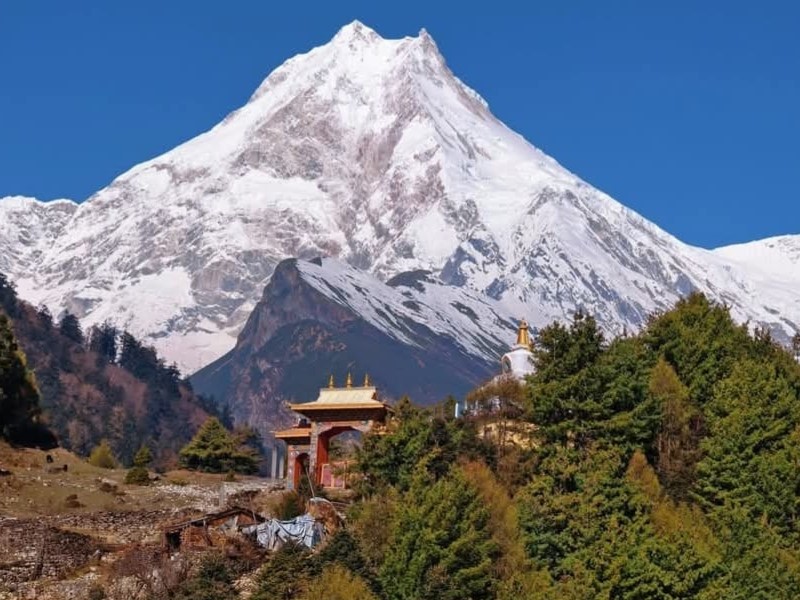
Langtang Valley Trek , Alright, the journey starts with the drive from Kathmandu. You’ll travel roughly 5–6 hours by jeep from Kathmandu to Syabrubensi, which is where the Langtang Trek starts. You’ll wind through terraced hills, cross rivers, stop at roadside tea shops, and have lunch stops. Along the way, you’ll watch the landscape shift from urban sprawl to actual countryside, with villages getting smaller and mountains getting bigger with each turn. The Langtang region is located in Bagmati Province and is home to the Langtang National Park. The peaks that can be seen are Langtang Lirung (7,246 meters / 23,773 feet) and Ganesh Himal (7,422 meters / 24,350 feet).
Best Season for Langtang Valley Trek
There are two best seasons when it comes to trekking in Nepal, whether it’s the Langtang Valley Trek or the Manaslu Circuit Trek.
Spring (March to May): The weather is stable, you’re not getting rained on constantly, and visibility is clear. You’ll find pink, red, and white flowers, including rhododendrons, and will wake up on most mornings to actual blue sky.
Autumn (September to November) is equally good, with just different vibes. The air is crisp, everything’s clean and clear, and the monsoon’s finally over. It’s technically peak season, which means more people, but honestly, it’s still pretty quiet compared to other treks. Fewer bugs too, which is nice when you’re trying to sleep.
How Hard is the Langtang Valley Trek?
The Langtang Valley Trek is moderate, and the trek difficulty basically depends on your fitness level and how many rest days you take. Most people walk 4–7 hours daily, gaining anywhere from 500 –1,000 meters per day. Some days feel fine, while some do not. That’s normal. The highest point you hit is Kyanjin Ri at 3,870 meters (12,700 feet).
To prepare yourself for the Langtang Valley Trek, spend 8–12 weeks doing long hikes with elevation gain, throw on a loaded backpack and hit the trails every weekend. Stairs, cycling, running, or anything that builds your legs and cardiovascular system will be helpful. Start practicing these exercises, and trust me, you’ll thank yourself later.
How the Trek Looks Like: What Actually Happens
Alright, let me walk you through what each day really feels like on the Langtang Valley Trek itinerary.
Day 01: Arrive in Kathmandu (1,345 m) – Transfer to Hotel
You land at Tribhuvan Airport in Kathmandu and transfer to your hotel, and honestly, the best thing you can do is rest, eat some solid food, and prepare mentally for what’s coming. Don’t overexert yourself, as tomorrow the real adventure starts.
Day 02: Drive to Syabrubensi (1,470 m) via Nuwakot and Dhunche
You’ll leave Kathmandu with a drive and head northeast toward Syabrubensi, passing through Nuwakot and Dhunche (1,950 m / 6,398 feet) along the way. The roads are narrow, winding, and potholed, and your driver will probably think he’s in a race. You’ll pass terraced farmland, small villages, and gradually watch the landscape transform. Along the way, you’ll stop for lunch. By the time you reach Syabrubensi, you’re ready to walk tomorrow and are done sitting in a jeep.
Day 03: Trek to Lama Hotel (2,350 m)
Your first real day on the Langtang Trek route. You start at Syabrubensi, and the trail immediately takes you through subtropical forests. You’ll cross suspension bridges. This day eases you in. It’s 6 hours of walking, but mostly steady, not brutal.
Day 04: Trek to Langtang Village (3,310 m) – 5 hrs
Things get more interesting as you climb noticeably, entering the real Langtang region landscape. The forest shifts, rhododendron trees appear, and the valley starts narrowing around you. You’ll cross more suspension bridges and pass through tiny settlements where locals wave casually. The altitude starts to be noticeable. Langtang village appears on a ridgeline with incredible views.
Day 05: Trek to Kyanjin (3,749 m)
The shortest trekking day, but don’t be fooled by the numbers. You’re gaining significant altitude, and the trail gets steeper. The landscape opens up, alpine meadows appear, and the views expand. You’ll see Langtang Lirung more clearly now, and Ganesh Himal dominates the eastern horizon. By the time you reach Kyanjin (also called Kyanjin Gompa), you’re at 3,749 meters (12,293 feet).
Day 06: Rest Day – Local Excursion and Scenic Viewpoints
Day 6 is your acclimatization day in Kyanjin, as your body needs time to adjust to 3,749 meters (12,293 feet), and your mind needs to actually absorb what you’re seeing. Most people hike up to Kyanjin Ri (3,870 meters / 12,700 feet) for panoramic viewpoints. Other options include exploring the Kyanjin Gompa monastery, interacting with yak herds, or trying authentic Langtang yak cheese and yogurt that locals produce here.
Day 07: Trek to Lama Hotel (2,350 m)
This is the descent, and you’ll realize why bringing trekking poles is genuinely non-negotiable. The trail is rocky in sections, steep in others, and your body feels every meter. But here’s the good part: the landscape transforms as you descend. You go from alpine meadows back through forest, from sparse vegetation to thick vegetation, from cold air to warmer air. By Lama Hotel, you’re back in subtropical forest.
Day 08: Trek to Syabrubensi
You’ll head back to Syabrubensi, where the Langtang Trek officially ends. Six hours of descent through familiar terrain somehow looks different when you’re going the opposite direction. You notice things you missed on the way up. The forest looks greener, the rivers sound louder, and mentally you’re already thinking about a hot shower.
Day 09: Drive to Kathmandu – 6 hrs
Six hours back through the same rough roads, but you’re experienced now. You know what to expect and what not to. As you travel back, you can notice the transition from mountain silence to city chaos is unsettling.
Day 10: International Departure or Onward Travel
Before your departure, you’ll have time to eat real food, maybe buy some souvenirs, and process everything that happened over the past 10 days. The Langtang Valley Trek becomes a memory, photos, and stories you’ll tell for years.
Why should you Do This Trek: Attractions of Langtang Valley Trek
Here’s what makes the Langtang Valley special.
Kyanjin Gompa: It is an ancient yet active monastery at 3,870 meters and the monks here are welcoming to trekkers. You’ll find prayer flags all around and Buddhist chants echoing at dawn. You can spend an evening here watching the sunset that turns the peaks orange and red.
The Rhododendron Forests: If you trek during spring, you’ll observe the rhododendron forests in Langtang and walking through them feels like stepping into nature’s art gallery. Different species bloom at different times, so you get waves of color throughout spring. It’s one of those things photographs don’t capture properly. You have to be there.
The Mountains: Mountains like Langtang Lirung and Ganesh Himal can be seen from Langtang and standing at various viewpoints and just staring can be something worth trying while you’re in Langtang Valley, as the light changes constantly, colors shift, probably making you take the same photo 50 times.
Yak Culture: This is a unique thing about the Langtang region that doesn’t exist in lower altitude treks. Yak herds are genuinely part of the landscape. Watching these animals navigate steep terrain is fascinating. And you can try Langtang’s fresh cheese curds with local honey. It is worth the entire trek.
The Actual Valley Itself: The Langtang Valley feels protected and untouched and you’d walk through something that looks the way it’s looked for centuries.
The Paperwork Stuff: Permits and Costs
We handle everything related to permits so that you can trek without worrying about all that paperwork. You’ll Need:
- TIMS Permit (Trekking Information Management System)
- Langtang National Park Permit
What You Actually Need in Your Backpack
The foundation of everything is layering, and you need moisture-wicking base layers made from wool or synthetic material, not cotton. Your mid-layers should provide insulation, so go with fleece or lightweight down. Then your outer shell needs to block both wind and water, as the weather changes fast in the mountains. Most importantly, bring a puffy down jacket for evenings and high-altitude sections. For footwear, bring waterproof boots that you’ve already broken in. Also, bring camp shoes, as freeing your feet at night feels like an actual miracle after hours of hiking. Your sleep system matters more than you think, so get a sleeping bag rated to -10°C or colder. You can rent one in Kathmandu, especially in the Thamel area.
Trekking poles protect your knees during descent, and also pack a headlamp with backup batteries, as darkness comes early at altitude. Bring water purification tablets to avoid getting sick. Sunscreen SPF 50+ is essential because the altitude sun burns differently and faster than you’d expect. UV-blocking sunglasses protect your eyes from intense reflection off snow and at high elevations. Include basic first aid supplies. And get altitude sickness medication like Diamox prescribed by your doctor beforehand instead of trying to buy it on the trek.
Altitude Sickness and Prevention
Here’s what they don’t tell you clearly enough: altitude sickness doesn’t care about your fitness level. I’ve watched ultra-marathoners completely struggle while casual hikers thrived. Genetics matter, and we don’t fully understand why some people acclimate easily and others don’t. The early signs are mild headache, slight nausea, and fatigue beyond normal tiredness. The temptation is to ignore these and push through, thinking “it’ll go away.” However, the golden rules are simple: ascend slowly (which the Langtang Trek itinerary does for you), drink absurd amounts of water until your pee is basically clear, skip alcohol completely, and never push through serious symptoms. Seriously, listen to your body. If something feels genuinely wrong, it probably is.
Many people take Diamox to help with acclimatization, which can definitely help. But discuss it with your doctor first before you trek; don’t just assume you need it or don’t need it. If Diamox works for you, great. If not, focus on the basics: slow ascent, water, and respecting your body’s signals.
Should You Actually Do This Trek?
If you’ve read this far and you’re excited, probably yes. It’s not beginner-friendly in the sense that it requires some fitness, but it’s absolutely achievable for anyone willing to prepare properly and respect the challenge. You’ll definitely enjoy the silence at dawn, watching sunrise turn snowy peaks orange and red, and meeting locals who treat you with genuine kindness despite language barriers. The Langtang Trek in Nepal offers world-class mountain experiences without extreme costs or extreme technical difficulty. It’s accessible, authentic, and genuinely rewarding.