
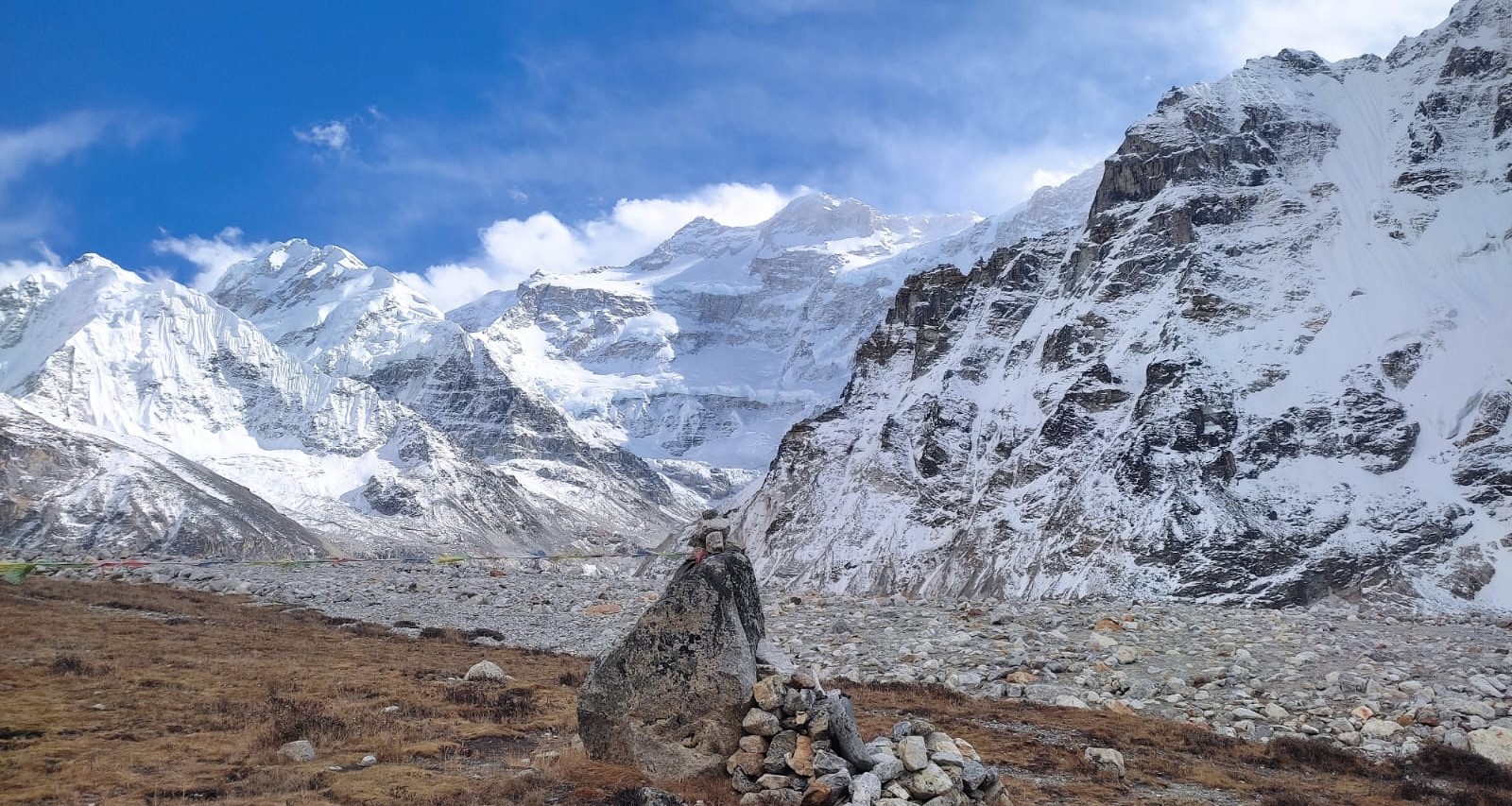
Kanchenjunga Circuit Trek Overview
The Kanchenjunga Circuit Trek is a 22-day journey that circles the base of Mount Kanchenjunga, the third-highest mountain in the world. It is located in far eastern Nepal, and this remote trekking region is protected by the government to preserve its untouched natural beauty and local culture. Since only a limited number of permits are issued every year, the trails remain peaceful and uncrowded, giving you a true wilderness experience far away from busy tourist routes.
This long journey takes you through an amazing variety of landscapes. You begin in warm lowland villages filled with rice fields and cardamom farms before climbing through deep river valleys, green forests, and rocky alpine terrain into a world of mountains. Along the way, you will stay in traditional villages where Sherpa, Limbu, and Rai communities continue to live simple mountain lifestyles that have remained unchanged for generations.
What makes this trek truly special is that you get to experience both sides of Mount Kanchenjunga. Instead of visiting only one base camp, you will hike to the northern face at Pangpema and the southern face at Okthang. During the journey, you will cross remote mountain passes, visit ancient monasteries, walk beside giant glaciers, and enjoy unforgettable views of massive Himalayan peaks. If you are looking for a challenging trekking holiday filled with raw mountain scenery, authentic local culture, and true adventure, the Kanchenjunga Circuit Trek is the perfect choice.
Major Highlights of the Kanchenjunga Circuit Trek
- Stand at both the North Base Camp (Pangpema) and South Base Camp (Okthang).
- Enjoy spectacular views of hidden Himalayan peaks, including the famous pyramid-shaped Mount Jannu and the borders of Sikkim and Tibet.
- Experience complete peace and quiet on remote trails untouched by large-scale commercial tourism.
- Cross four rugged mountain passes in a single day.
- Meet friendly local communities and learn about the traditions, food, and lifestyle of the eastern Himalayan villages.
- Explore the protected Kanchenjunga Conservation Area and encounter rare red pandas and colorful birds
- Enjoy a scenic domestic flight from Bhadrapur back to Kathmandu at the end of your unforgettable journey.
Heading Up the Isolated Northern Valley
Your adventure begins with a short flight from Kathmandu to Bhadrapur, followed by a long scenic drive through the eastern hills to Taplejung. The following morning, you take a local jeep ride to Rani Pul, where your walking journey officially begins. During the first few days, you will follow the Tamor River through beautiful green valleys filled with waterfalls, terraced farms and hanging bridges.
As you climb higher through villages like Sekathum and Gyabla, the warm jungle landscape slowly changes into cooler pine and rhododendron forests. Eventually, you arrive at Ghunsa, a beautiful Sherpa village with wooden houses, spinning prayer wheels, and peaceful monasteries. You will spend an important acclimatization day here so your body can slowly adjust to the thinner mountain air while exploring the local surroundings and nearby alpine lakes.
Beyond Ghunsa, the trail becomes more rugged and dramatic. You will enter the rocky valley of Kambachen with giant glacier streams and breathtaking views of Mount Jannu rising sharply above the landscape. Continuing higher through rough moraine trails and barren mountain terrain, you eventually reach the remote settlement of Lhonak. From there, a final climb takes you to Pangpema, the North Base Camp of Kanchenjunga. Standing here beside the massive glaciers and icy mountain walls is one of the most rewarding moments of the entire trek.
After enjoying the northern side of the mountain, you retrace your steps back to Ghunsa to prepare for the second half of the circuit toward the southern valleys.
Crossing the Ridge to the Southern Face
Leaving Ghunsa behind, the trail climbs steeply toward the remote ridge leading to Sele La Base Camp. This section is widely considered the toughest part of the entire trek because you must cross four high mountain passes, including Sele La and Mirgin La, in a single day. The trails are rough, rocky, and exposed, but the scenery is absolutely unforgettable. From the high ridges, you can enjoy endless views of snow-covered mountains, deep valleys, and untouched wilderness stretching in every direction. After crossing the passes, you descend into the peaceful valley of Tseram on the southern side of Kanchenjunga.
The main destination on this side is the beautiful Okthang Viewpoint, also known as the South Kanchenjunga Base Camp. From here, you can sit beside the giant Yalung Glacier and admire the enormous peaks that form the famous “Five Treasures of Snow.” Once you have enjoyed the incredible scenery, you begin your long journey back down through forests, farming villages, and cardamom fields toward the lower hills.
Eventually, a scenic drive brings you back to Bhadrapur for your domestic flight to Kathmandu. After weeks in the wilderness, a warm shower, a comfortable hotel bed, and a farewell dinner in the capital city feel especially rewarding.
Physical Preparation for the Journey
Since this adventure lasts for 22 days and involves walking in high-altitude mountain regions for nearly three weeks, preparing your body before the trip is extremely important. You do not need technical climbing skills, but you should have strong legs, healthy lungs, and good physical stamina to walk on rough trails for several hours every day while carrying your own day pack.
Focus on improving your endurance through regular cardio exercises like jogging, cycling, swimming, hiking, or using a stair machine at the gym. The best preparation is to practice long uphill walks while carrying a backpack weighing around 5 to 7 kilograms. This helps strengthen your legs, core, and back while also helping you break in your trekking boots properly. Simple exercises like squats, lunges, step-ups, and planks are also very useful for improving balance and strength. Good physical preparation not only makes the trek easier but also helps your body recover faster at high altitude.
Kanchenjunga Circuit Trek – Itinerary in Brief
| Day | Destination | Sleep altitude | Duration | Distance | Activities |
|---|---|---|---|---|---|
| 01 | Kathamndu | 1345 M | 30 Min | 7 Km | Arrival at the airport, private transfer to hotel, and trek briefing. |
| 02 | Kathamndu | 1345 M | Full day | Full day | Free day for final gear checks, permit preparation, and rest. |
| 03 | Taplejug | 1820 m | 5-6 hrs | 250 km | Fly to Bhadrapur and drive through the eastern hills to Taplejung |
| 04 | Sekathum | 1660 m | 6-7 hrs | 18 km | Drive to Rani Pul and begin trekking along the Tamor River valley |
| 05 | Gyabla | 2730 M | 6-7 hrs | 16 Km | Walk through forests, waterfalls, and narrow river canyons to Gyabla. |
| 06 | Ghunsa | 3600 m | 6-7 hrs | 11 km | Trek into the beautiful Sherpa village of Ghunsa surrounded by pine forests |
| 07 | Ghunsa | 3600 M | Full day | Rest Day | Acclimatization day with optional hikes to nearby viewpoints and lakes. |
| 08 | Kambachen | 4050 m | 5-7 hrs | 11 km | Follow glacier rivers and rocky paths into the dramatic Kambachen valley. |
| 09 | Kambachen | 4050 m | 6-7 hrs | 12 Km | Side trip to Jannu Base Camp before returning to Kambachen. |
| 10 | Lhonak | 4780 M | hrs | 10 Km | Hike beside giant glacier moraines to the high mountain settlement of Lhonak. |
| 11 | Lhonak | 4780 M | 6-7 hrs | 12 km | Trek to Pangpema North Base Camp and return to Lhonak. |
| 12 | Ghunsa | 3600 M | 6-7 hrs | 21 Km | Descend back down the valley to the comfortable lodges of Ghunsa. |
| 13 | Sele La base camp | 4290 m | 5-6 hrs | 9 km | Climb a steep mountain trail to the isolated Sele La Base Camp. |
| 14 | Tseram | 3870 m | 6-7 hrs | 15 km | Cross four high mountain passes and descend into the southern valley. |
| 15 | Ramche | 4580 m | 6-7 hrs | 14 km | Visit Okthang South Base Camp and stay overnight at Ramche. |
| 16 | Torongding | 3000 m | 6-7 hrs | 13 Km | Walk down through fresh pine and rhododendron forests. |
| 17 | Yamphudin | 1500 m | 6-7 hrs | 17 km | Continue Ascending along the rhododendron forest and valleys toward Yamphudin. |
| 18 | Kebang | 1740 m | 5-6 hrs | 12 km | Trek through cardamom farms and traditional hillside villages |
| 19 | Bhadrapur | 91 m | 6-7 hrs | 240 km | Scenic full-day drive from the hills back to Bhadrapur |
| 20 | Kathmandu | 1345 m | 1 hrs | 450 km | Fly back to Kathmandu and enjoy a farewell dinner. |
| 21 | Kathmandu | 1345 m | Full day | Full day | Rest day for shopping, sightseeing, or relaxing in the city. |
| 22 | Departure | Departure | 300 min | 7 km | Private transfer to the airport for your international departure. |
Trip Details Itinerary
Day 01: Arrival at Kathmandu Airport and Transfer to Hotel
- Distance : 7 KM
- Duration : 30 Min
- Max. Altitude :1345 m
Overview: Upon your arrival at the international airport in Kathmandu, our team will warmly welcome you and transfer you to your hotel in a private vehicle. After checking in, you can rest and recover from your flight before joining a short evening briefing about the trek, permits, packing, and safety guidelines.
- Accommodation: 3 Star Hotel
- Meals Include:
Day 02: Free Day in Kathmandu for Trek Preparation
- Distance : Full day
- Duration : Full day
- Max. Altitude :1345 m
Today is reserved for final trek preparation and permit arrangements. You can spend your free time exploring the busy streets of Kathmandu, visiting local shops for last-minute trekking gear, or relaxing at your hotel before the long mountain journey begins.
- Accommodation: 3 Star Hotel
- Meals Include: Breakfast
Day 03: Flight to Bhadrapur and Drive to Taplejung
- Distance : 450 km
- Duration : 6-7 hrs
- Max. Altitude :1820 M
Early in the morning, you will take a scenic domestic flight from Kathmandu to Bhadrapur in eastern Nepal. After landing, you continue by private vehicle through winding hill roads, tea gardens, farming villages, and beautiful mountain scenery until reaching Taplejung.
- Accommodation: Tea House
- Meals Include: Breakfast , Lunch and Dinner
Day 04: Drive to Rani Pul and Trek to Sekathum
- Distance : 18 km
- Duration : 6-7 hrs
- Max. Altitude :1660 m
After breakfast, a short jeep ride takes you to Rani Pul, where your walking journey officially begins. The trail follows the rushing Tamor River through narrow valleys, waterfalls, hanging bridges, and green forests before reaching the small riverside settlement of Sekathum.
- Accommodation: Tea House
- Meals Include: Breakfast , lunch and Dinner
Day 05: Trek from Sekathum to Gyabla
- Distance : 16 km
- Duration : 6-7 hrs
- Max. Altitude :2730
Today’s route climbs steadily through rocky river gorges, bamboo forests, and small mountain villages. As you gain altitude, the warm jungle environment slowly changes into cooler forests filled with pine and rhododendron trees before arriving at Gyabla.
- Accommodation: Tea House
- Meals Include: Breakfast , Lunch and Dinner
Day 06: Trek from Gyabla to Ghunsa
- Distance : 11 km
- Duration : 5-6 hrs
- Max. Altitude :3600 m
The trail gradually climbs higher into the upper mountain valleys. You will pass prayer flags, mani walls, and small monasteries before reaching the beautiful Sherpa village of Ghunsa. This peaceful village is known for its wooden houses, friendly locals, and strong Tibetan-Buddhist culture.
- Accommodation: Tea House
- Meals Include: Breakfast , Lunch and Dinner
Day 07: Acclimatization Day in Ghunsa
- Distance : Rest Day
- Duration : Rest Day
- Max. Altitude :3600 m
This important acclimatization day helps your body slowly adapt to the higher altitude. You can spend the day resting at your lodge, drinking hot tea, exploring the village, or taking a short hike to nearby viewpoints and alpine lakes.
- Accommodation: Tea House
- Meals Include: Breakfast , Lunch and Dinner
Day 08: Trek from Ghunsa to Kambachen
- Distance : 11 km
- Duration : 5-6 hrs
- Max. Altitude :4050 m
Leaving Ghunsa behind, the trail follows glacier rivers and rocky mountain paths deeper into the valley. Massive snow-covered peaks begin to dominate the landscape as you walk toward the remote settlement of Kambachen beneath the giant face of Mount Jannu.
- Accommodation: Tea House
- Meals Include: Breakfast , Lunch and Dinner
Day 09: Excursion to Jannu Base Camp and Return to Kambachen
- Distance : 12 km
- Duration : 5-7 hrs
- Max. Altitude :4700 m
Today, you take an exciting side trip toward Jannu Base Camp for breathtaking close-up views of one of the Himalaya’s most beautiful mountains. After enjoying the dramatic scenery of glaciers and icy cliffs, you return to Kambachen for the night.
- Accommodation: Tea House
- Meals Include: Breakfast , Lunch and Dinner
Day 10: Trek from Kambachen to Lhonak
- Distance : 10 km
- Duration : 5-7 hrs
- Max. Altitude :4780 m
The trail climbs steadily through barren alpine terrain and giant glacier moraines. Vegetation disappears almost completely as you enter a wild high-altitude landscape surrounded by snow and rock before reaching the remote outpost of Lhonak.
- Accommodation: Tea House
- Meals Include: Breakfast , Lunch and Dinner
Day 11: Trek to Pangpema North Base Camp and Return to Lhonak
- Distance : 14 km
- Duration : 5-7 hrs
- Max. Altitude :5143 m
Today is one of the biggest highlights of the trek. You hike to Pangpema, the North Base Camp of Mount Kanchenjunga, for spectacular close-up views of giant glaciers and towering mountain walls. After spending time at the viewpoint, you descend back to Lhonak.
- Accommodation: Tea House
- Meals Include: Breakfast , Lunch and Dinner
Day 12: Trek from Lhonak to Ghunsa
- Distance : 21 km
- Duration : 6-7 hrs
- Max. Altitude :4780 m
After visiting the northern base camp, you retrace your route back down the valley. The descent feels easier as you return through rocky mountain terrain and glacier rivers to the comfortable lodges of Ghunsa.
- Accommodation: Tea House
- Meals Include: Breakfast ,Lunch and Dinner
Day 13: Trek from Ghunsa to Sele La Base Camp
- Distance : 9 Km
- Duration : 5-6 hrs
- Max. Altitude :4290 m
Today, the trail leaves the main valley and climbs steeply toward the isolated ridge leading to Sele La. The landscape becomes quieter and more rugged as you move into a remote high-altitude environment below the mountain passes.
- Accommodation: Tea House
- Meals Include: Breakfast , Lunch and Dinner
Day 14: Cross the High Passes and Trek to Tseram
- Distance : 15 km
- Duration : 6-7 hrs
- Max. Altitude :4660 m
This is one of the most demanding days of the entire circuit. You cross four high mountain passes, including Sele La and Mirgin La, while enjoying unforgettable views of snowy peaks and deep valleys. After the crossings, the trail descends into the peaceful southern valley of Tseram.
- Accommodation: Tea House
- Meals Include: Breakfast , lunch and Dinner
Day 15: Trek to Okthang South Base Camp and Stay at Ramche
- Distance : 14 km
- Duration : 5-6 hrs
- Max. Altitude :4730 m
Following the Yalung Glacier valley, you hike toward Okthang Viewpoint, the South Base Camp of Kanchenjunga. From here, you can admire the massive southern face of the mountain and the famous “Five Treasures of Snow” before returning to Ramche.
- Accommodation: Tea House
- Meals Include: Breakfast , Lunch and Dinner
Day 16: Trek from Ramche to Torongding
- Distance : 13 Km
- Duration : 6-7 hrs
- Max. Altitude :4580m
Leaving the high alpine region behind, you descend into greener valleys filled with pine forests, juniper bushes, and rhododendron trees. The thicker air and warmer temperatures make today’s walk feel more comfortable.
- Accommodation: Tea House
- Meals Include: Breakfast , Lunch and Dinner
Day 17: Trek from Torongding to Rani Pul
- Distance : 17 km
- Duration : 6-7 hrs
- Max. Altitude :3000 m
The trail continues to the dense Rhododendron forest slightly steep ascent, with a beautiful view of snowcapped mountains and lush green forest. As you reach Yamphudin you will experience warm Sherpa hospitality with a beautiful view of never-ending hills and valleys.
- Accommodation: Tea House
- Meals Include: Breakfast , lunch and Dinner
Day 18: Trek from Yamphudin to Kebang
- Distance : 12 km
- Duration : 6-7 hrs
- Max. Altitude :1740 m
Today you walk through peaceful farming villages and cardamom fields while enjoying views of the eastern hills. The route passes traditional homes and terraced farmland before reaching Kebang.
- Accommodation: Tea House
- Meals Include: Breakfast , Lunch and Dinner
Day 19: Drive from Kebang to Bhadrapur
- Distance : 240 km
- Duration : 6-7 hrs
- Max. Altitude :91 m
After breakfast, you begin the long scenic drive from the mountain hills down to the lowland city of Bhadrapur. Along the way, you pass rivers, tea gardens, villages, and beautiful countryside landscapes
- Accommodation: Normal Hotel
- Meals Include: Breakfast , Lunch and dinner
Day 20: Flight from Bhadrapur to Kathmandu
- Distance : 450 km
- Duration : 1 hrs
- Max. Altitude :1345 m
This morning you take a short domestic flight back to Kathmandu. After checking into your hotel, you can enjoy a relaxing afternoon exploring the city, resting, or shopping before joining a special farewell dinner in the evening.
- Accommodation: 3 Star Hotel
- Meals Include: Breakfast and Farewell Dinner
Day 21: Free Day in Kathmandu
- Distance : Full Day
- Duration : Full day
- Max. Altitude :1345 m
Today is a free buffer day in Kathmandu in case of weather delays during the trek. If everything goes smoothly, you can spend your day visiting cultural heritage sites, shopping for souvenirs, or simply relaxing after your long mountain adventure.
- Accommodation: 3 Star Hotel
- Meals Include: breakfast
Day 22: Final Departure
- Distance : 7 km
- Duration : 30 Min
- Max. Altitude :1345 m
Your amazing Kanchenjunga adventure comes to an end today. Our representative will transfer you to the international airport for your flight home.
- Accommodation:
- Meals Include: Breakfast
Cost Details
THE PACKAGE INCLUDES THE FOLLOWING SERVICES
- Airports pick up and drop off, upon arrival and departure in Kathmandu.
- Pre-meeting before the trek.
- 4-night hotel accommodation in Kathmandu with breakfast (3-star hotel)
- All Required Treks permits and Kanchenjunga Special Zone Permits.
- Kanchenjunga Conservation Area Project permits.
- Tea house accommodation during the Trekking in twin basis
- Meals on full board ( Breakfast, Lunch, and Dinner ) with 3 times tea/coffee during the trek
- Seasonal fresh fruits as Available
- Free Duffel bag for trek and Well Plan Trekking T-shirt
- Sleeping Bag and Down jacket for Trek (Please return after Complete Trek)
- An English-speaking trek leader registered by Nepal governments and first Aid Trained.
- Trekking Porters during your trekking in sharing Basis(2 person 1 porter)
- All members (guide And Porters), salary, food, accommodation, transportation and Insurances.
- Kathmandu to Bhadrapur and Return Flight tickets with guide
- First AID Kit Medications with your guide.
- Bhadrapur to Taplejung/Sekathum and Yamphudin/Taplejung to Birtamod/Bhadrapur by Private jeep or bus
- Rescue Mediater if Necessary( please bring high altitude covering insurance must cover evacuating and medications)
- Government Tax(VAT) and Office Service Charges
- Well Plan Trekking trek achievement certificate after the successful trek
- Farewell dinner in Kathmandu at a cultural restaurant
THE PACKAGE EXCLUDES THE FOLLOWING SERVICES
- International airfare
- Nepal entry visa fee (you may easily issue the visa upon your arrival at Tribhuwan International Airport – Kathmandu).
- Travel insurance, which has to cover emergency high-altitude helicopter rescue and evacuation in addition to medical expenses (compulsory)
- Your personal expenses. (Phone call, Wifi, Laundry service, bar bills, battery recharge, a bottle of water or hot water, Mineral water, Hot shower, etc.)
- All the alcoholic drinks and bar bills.
- Extra Hotel accommodation in Kathmandu because of early arrival or late departure. early arrival from the mountain (due to any reason) than the scheduled Itinerary.
- Services not mentioned in the ‘Services Includes’ section ( Please ask us if you are confused about any services )
- Kathmandu lunch and Dinner
- Tips for the guide and porter.
Equipment’s
RECOMMENDED EQUIPMENT LIST
This list is a guide to help you pack for your trip. This is not intended to be a comprehensive clothing and equipment list; rather it is intended to act as a reminder of those items that we feel necessary for your comfort and convenience. we also suggest that you pack only what is necessary.
Head
- A warm hat that covers your ears
- Sunglasses
- Sun hat
- Headlamp with extra batteries
Upper body
- T-shirts
- Fleece jacket or sweater
- Fleece wind–stopper jacket
- Waterproof shell jacket
- Down vest and /or jacket (optional)Hands
- Lightweight gloves (water /windproof)
- Heavyweight gloves or mittens with a waterproof shell outer
Lower body
- Underwear
- Hiking trousers
- Fleece or woolen trousers
- Lightweight thermal bottoms
- Lightweight cotton pants
- Waterproof (preferably breathable fabric )shell pants Feet
- Thin lightweight inner socks
- Heavy poly or wool socks
- Hiking boots with spare laces
- Camp shoes (sneakers and sandals)
Sleeping
- Sleeping bag (good to -10 degrees C de 14 degrees F)
- Fleece sleeping bag liner (optional)Toiletries
- Toothbrush /paste
- Multi-purpose soap
- Nail clippers
- Deodorants
- Medium-sized quick-drying towel
- Face and body moisturizer
- Small mirror
- Female hygiene products
Personal hygiene
- Wet wipes (baby wipes)
- Tissue/toilet roll
- Antibacterial hand wash
Medical
- Small, personal first-aid kit (simple and light)
Extras /luxuries
- Reading book
- Trail map /guidebook
- Journal and pen
- Travel game(chess, backgammon, playing cards etc)
- Modest swimsuit
- Binoculars
Trip Map
FAQ
The Kanchenjunga Circuit Trek is considered a very challenging trekking route. It is much harder than regular trekking holidays because it lasts for more than three weeks, includes remote mountain trails, and crosses high passes above 5,000 meters. Good physical fitness and previous trekking experience are strongly recommended.
Yes, the risk of altitude sickness is quite high because you spend many days walking and sleeping in thin mountain air. To help your body adjust safely, the itinerary includes important acclimatization days in Ghunsa and Kambachen before moving to higher elevations.
The best seasons are spring (March to May) and autumn (September to November). During these months, the weather is usually more stable, the skies are clearer, and the mountain views are at their best.
Accommodation mainly consists of simple local teahouses and basic mountain lodges. Since the region is very remote, facilities are rustic compared to popular trekking areas. Most rooms are twin-sharing with shared bathrooms.
Yes, previous trekking experience is highly recommended. You should feel comfortable walking for several hours a day on rough, steep, and uneven mountain trails.
You should bring strong trekking boots, warm thermal layers, a heavy down jacket, waterproof outer clothing, trekking poles, gloves, sunglasses, and a good-quality sleeping bag suitable for freezing temperatures.
Some lower villages provide limited electricity and phone charging facilities for an extra fee. However, as you climb higher, electricity becomes less reliable and Wi-Fi is very rare.
Safety always comes first. Our guides closely monitor the mountain weather every day. If heavy snow or dangerous conditions block the passes, your guide may delay the crossing or adjust the schedule until the route becomes safe again.
You only need to carry a small personal day pack weighing around 5 to 7 kilograms. This usually includes water, snacks, a jacket, personal items, and your camera. Porters carry the heavier luggage.
The local teahouses serve simple but fresh meals such as Dal Bhat, fried rice, noodles, soups, potatoes, eggs, and hot drinks. These meals provide plenty of energy for long trekking days.
No. The Kanchenjunga region is a restricted area, so the Nepal government requires all trekkers to travel with a licensed guide and at least one other traveler in the group to receive the necessary permits.
Mountain weather and road conditions in eastern Nepal can change quickly and sometimes cause delays. This is why the itinerary includes an extra day in Kathmandu at the end of the trip as a safety buffer before your international flight.

