Trekking To The Annapurna Region
The Annapurna Region: Everything You Need to Know Before You Trek
A practical guide to routes,permits,seasons, and costs in Nepal’s most popular trekking region.
The bus from Pokhara shakes and bumps up a grovel road, and somewhere past Baisahar,the valley opens up and you see the Annapurna mountains for the first time, white, huge, and so close it doesn’t feel real. This is how most Annapurna treks start: not with a flight or a big dramatic moment, but with a long,bumpy bus ride that ends in something amazing. The Annapurna region is in north-central Nepal, and it’s the most popular trekking area in the country for good reason. It has snowy mountain passes, rhododendron forests, hot springs, Gurung and Thakali Villages, and one of the deepest valleys on Earth, all packed into one protected area. Whether you have four days or three weeks, there’s a route here that fits your time. This guide covers the routes,the permits,the costs, the seasons, and the small details that turn a good trek into a great one.
Why Trekkers Keep Choosing Annapurna
Nepal has three main trekking areas Everest, Langtang, and Annapurna and the Manaslu Circuit trek if you ask ten different guides which one is best, you’ll get ten different answers. But Annapurna usually wins because it has the most variety. One trek can take you from rice fields at 1,000 meters to a high, dry desert above 5,000 meters, sometimes in the same week. Everest gets you closer to the tallest mountain in the world. Annapurna gives you a bit of everything else.
The protected area itself is impressive too. According to the National Trust for Nature Conservation, which looks after the region, it has over 1,200 types of flowering plants, 105 mammal species, and 523 bird species plus famous animals like snow leopards, red pandas, and musk deer. You probably won’t actually see a snow leopard(almost nobody does), but the forest you walk through feels truly wild, not cleaned up for tourists.
And honestly, the setup on the trail helps a lot too. There are small guesthouses (called teahouses) every couple of hours along the trail, so you don;t need to carry a tent or a week’s worth of food. You can wake up and decide your plan for the day instead of following a fixed schedule someone else made months ago.
The Main Routes
Annapurna Base Camp (ABC) Trek
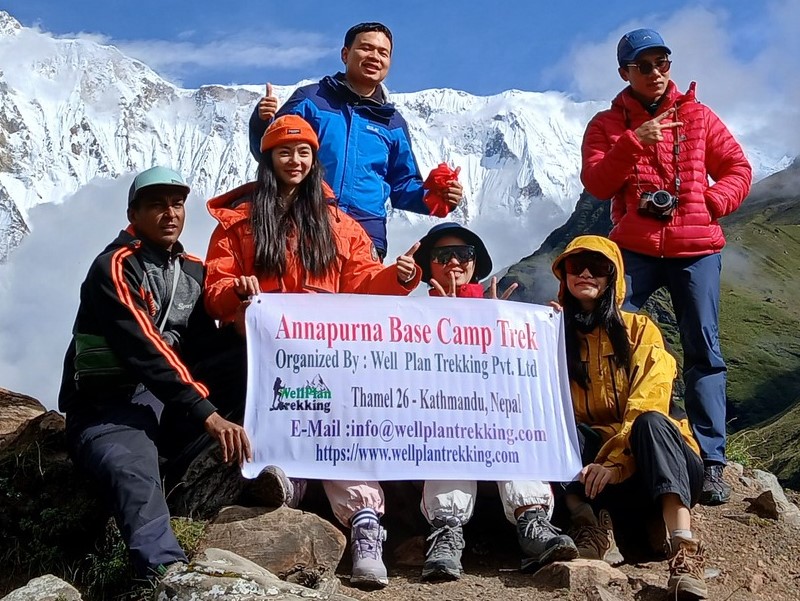
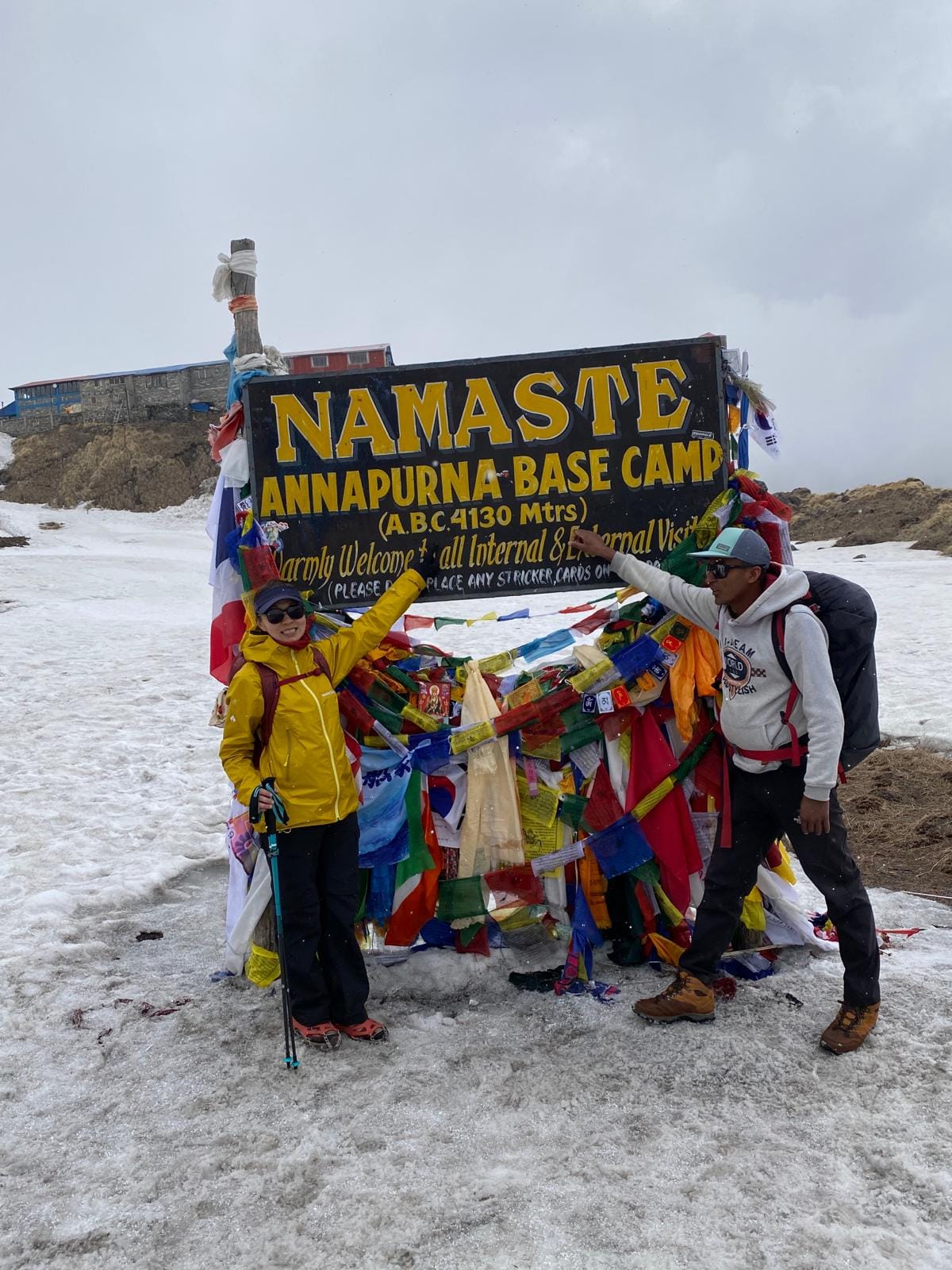
This is the most famous trek in the region, and it deserves to be. Most trips take 7 to 12 days round trip from Pokhara. You walk through Ghorepani, Poon Hill, and Chhomrong before reaching base camp itself, at about 4,130 meters. The view at the top is hard to find anywhere else: a full circle of mountains around you, including Annapurna I, Annapurna South, Hiunchuli, and the sacred Machhapuchhre (also called Fishtail Mountain). Very few base camps in the world give you a view this good in every direction without needing real mountain-climbing skills to get there.
Annapurna Circuit Trek
This is the classic trek. The full circuit goes all the way around the Annapurna mountains, crossing Thorong La Pass at 5,416 meters the highest and hardest point of the trek. It usually takes 12 to 18 days, depending on where you start and stop, how fast you walk, and whether you add extra side trips. What makes the Circuit special is how much the scenery changes along the way. You start in green farmland, walk through pine forest, cross into the dry highlands of Manang, and end up in the dry, desert-like land of Mustang on the other side. Very few treks anywhere change the scenery this much without taking a flight in between.
Poon Hill Trek
If you’re short on time or new to high altitude, Poon Hill gives you great mountain views in just 4 to 5 days. The famous sunrise spot at 3,210 meters shows you Annapurna South, Dhaulagiri, and Machhapuchhre, and you don’t need weeks of training or serious altitude practice to get there.
Mardi Himal Trek
People used to call this the region’s “secret” trek, but it’s not really a secret anymore it’s just much quieter than ABC or the Circuit. Mardi himal follows a narrow ridge up to a base camp at around 4,500 meters, with Machhapuchhre right in front of you for the whole last stretch. Most people finish it in 5 to 7 days.
Tilicho Lake Side Trip
Many trekkers add this on the Circuit. Tilicho Lake is one of the highest lakes in the world, sitting at over 4,900 meters. The side trip adds two to three days, but you get to see bright blue water surrounded by steep rock walls, a view that looks almost like another plant.
Khopra Danda Trek
Khopra Danda Trek usually takes 9 to 11 days round trip from Pokhara, and you walk through Ghandruk, Tadapani, and Swanta before reaching the Khopra Ridge itself. From here, you can add a side hike up to Khayer Lake, a sacred lake tucked below the Annapurna range. The view from the ridge is wide and uninterrupted: Dhaulagiri, Annapurna South, Nilgiri, and the Fishtail all lined up in front of you.
Annapurna Nar Phu Trekking
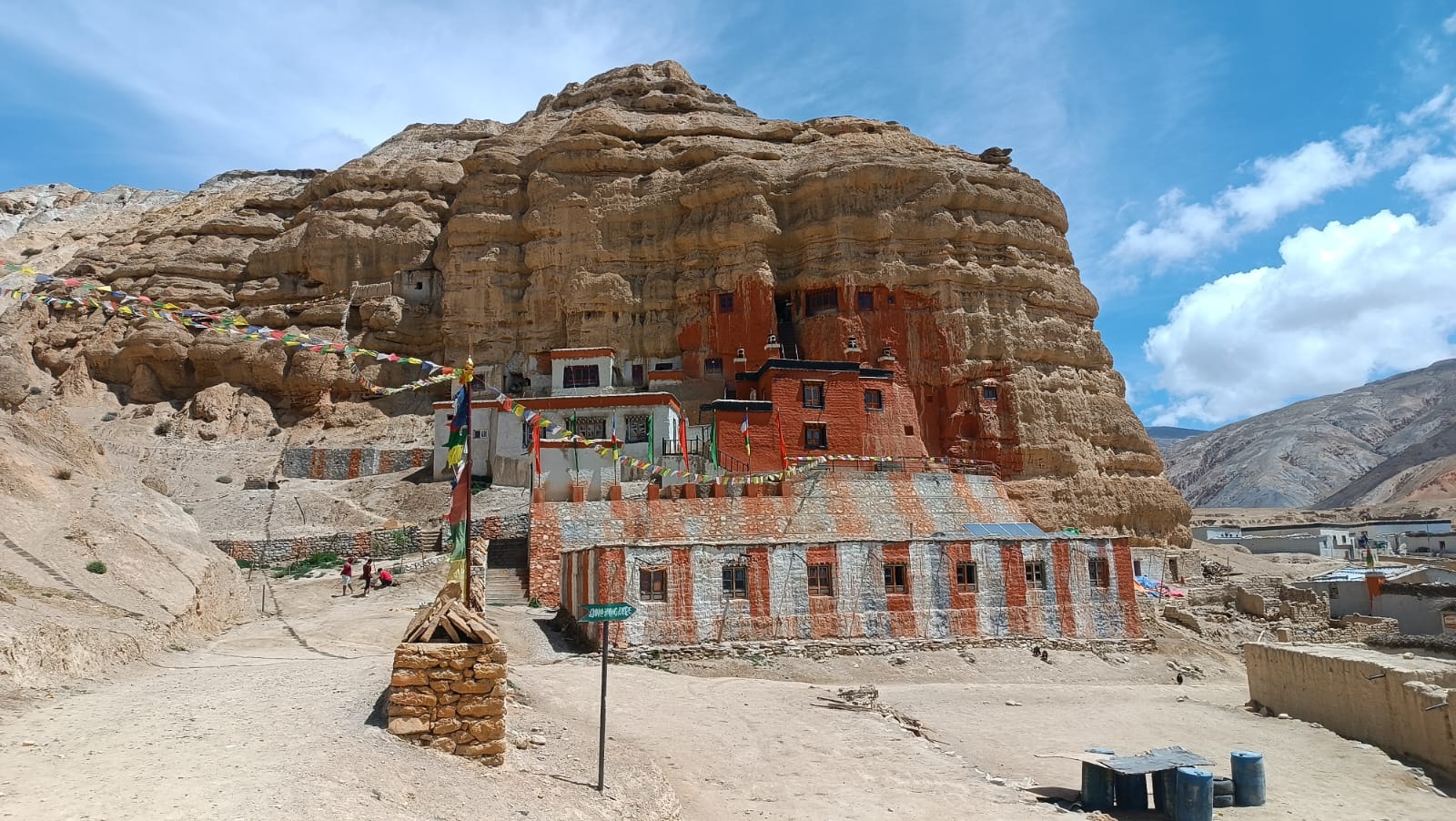
Annapurna Nar Phu Trek is one of the true off-the-beaten-path treks in the Annapurna region. It’s a restricted area, so you’ll need a special permit and a licensed guide, and the whole trip usually runs 15 to 19 days. The trail follows a narrow gorge into the hidden valleys of Nar and Phu, two villages that feel more like Tibet, with old monasteries, chortens, and stone houses stacked into the hillsides. From there, you climb up and over Kang La Pass at around 5,320 meters, connecting back into the main Annapurna Circuit route near Ngawal.
When to Go
Nepal’s trekking calendar has four seasons, and they are not all equally good for trekking.
Autumn (September to November) is the busiest season, and it earns that reputation. The sky stays clear, the weather is comfortable, and you can see far into the distance most days. The trade-off is more crowded trails and fuller teahouses.
Spring (March to May) is a close second. Rhododendron forests bloom in pink and red across the lower trails, and the weather slowly warms up as the season goes on. You might not see quite as far as in autumn, but the views are still usually good.
Winter (December to February) is good for trekkers who don’t mind the cold. Lower routes like Poon Hill and Mardi Himal stay open, but high passes like Thorong La can close if there’s heavy snow. The trails are much emptier, and teahouse owners have more time to talk.
Monsoon (June to August) is hard, even for experienced trekkers. Daily rain, leeches, and cloudy mountain views put most people off, and that’s fair for most of the region. The one big exception is the Mustang side of the Circuit, which stays fairly dry even during the heaviest monsoon months because the mountains block most of the rain there.
Altitude and Adaptation
Here’s something that surprises a lot of first-timers: altitude sickness doesn’t care how fit you are. Marathon runners can get hit just as hard as someone who barely exercises, sometimes even harder, because they walk too fast instead of slowing down. This is why getting used to the altitude is the most important part of this whole trek. More important than your boots. More important than your training.zThree rules cut the risk a lot:
- Climb slowly. Above 3,000 meters, don’t sleep more than 300–500 meters higher than the night before.
- Take rest days. Both the ABC and Circuit routes already include rest days at key spots (Chhomrong, Manang) for this exact reason, so don’t skip them just to save time.
- Go down if symptoms get worse. If a headache, nausea, or dizziness keeps getting worse instead of better, there’s only one answer: go down, not up.
Diamox (acetazolamide) helps a lot of trekkers get used to the altitude, but it works best as a backup, not a replacement for going slowly. Talk to a doctor before your trip, not once you’re already on the trail.
Respecting the region
It’s easy to forget, somewhere between taking your hundredth mountain photo, that the Annapurna Conservation Area is somebody’s actual home, over 100,000 people from Gurung, Thakali, Magar, and other communities, each with their own customs that existed long before trekking tourism did. A few simple habits go a long way toward being a good guest:
- Ask before taking photos of people, ceremonies, or private homes.
- Walk clockwise around mani walls and chortens (stone monuments), following local Buddhist tradition.
- Carry your trash out with you, including things that take a long time to break down: wrappers, batteries, wet wipes.
- Support teahouses and local guides directly, since tourism is one of the region’s main sources of income.
Final Thoughts
The Annapurna region has something for every level of trekker, from a five-day taste of the Himalayas to a three-week trek all the way around an 8,000-meter mountain. Pick the route that matches your time and your fitness, take the permits and the altitude seriously, and the mountains will take care of the rest. The bus ride up from Pokhara is the easy part. Everything after that gravel road is the trip you’ll actually remember.